
Breaker replacement
from $300
Single breaker, accessible panel, listed replacement for your panel. No minimum job.
Breaker replacement, tripping circuits diagnosed, buzzing panels, loose lugs, double-taps, and moisture damage. We find out why before we replace anything.
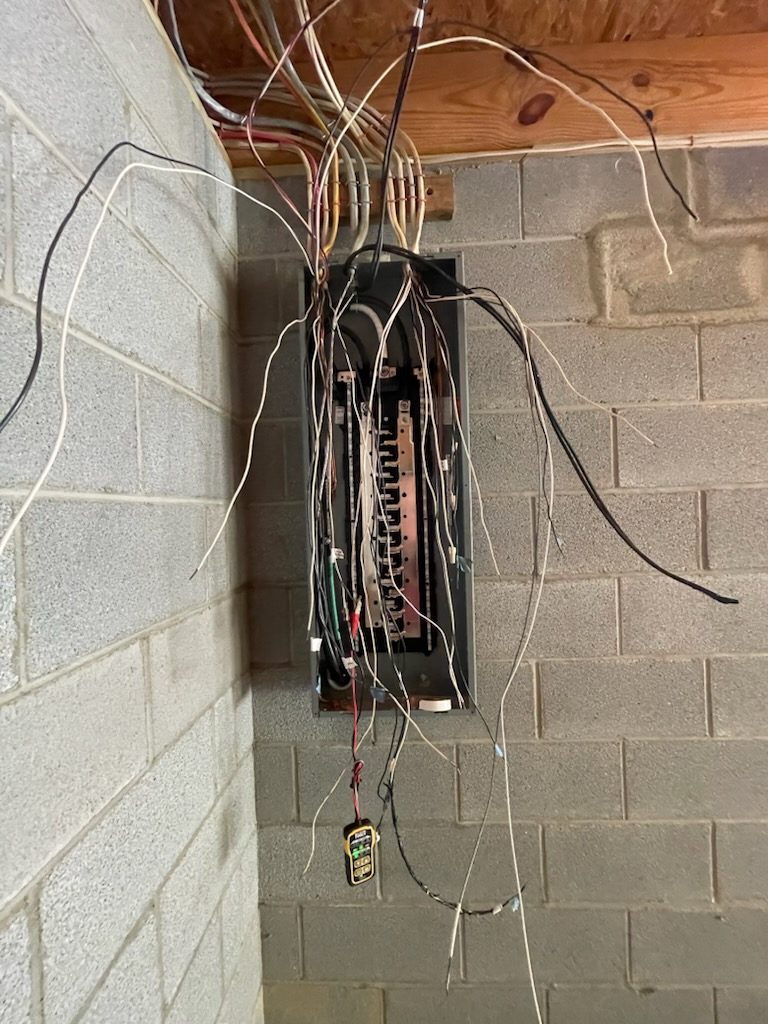
A breaker that trips is not a nuisance. It's the one part of your electrical system whose entire job is to tell you something is wrong, and it just did. The question is what.
Most panel calls we run in Asheville are one of a short list: a breaker that trips under normal load, a breaker that won't reset, a panel that buzzes, a cover that's warm, two wires jammed under one screw, or rust from a leak nobody found. Some of those are a twenty-minute fix. One or two of them are the reason houses burn down.
We test before we replace. Swapping a breaker without finding out what tripped it removes the alarm and leaves the fire. And if what we find is a panel past repairing, we'll say so — that's panel upgrade work, not a repair, and pretending otherwise wastes your money.
These are the ones where the failure mode is a fire, not an inconvenience.
A burning or hot-plastic smell near the panel. Stop and call. That's insulation or a breaker housing cooking.
Buzzing, crackling, or a hum that's gotten louder. Usually a connection arcing under load — at a breaker, the bus, or the main lugs.
Scorch marks, discoloration, or melted insulation visible at the panel or on a breaker.
A panel cover that's warm to the touch. Panels should be at room temperature.
A breaker that won't reset, or resets and trips instantly. That's usually a hard fault on the circuit.
Lights dimming or flickering across the whole house when a large appliance starts. Can indicate a loose main connection or a failing neutral, which is a serious one.
We run emergency calls for this. If you're seeing any of the above, don't wait — emergency electrical service is what that call is.
The deadfront comes off and we look before we touch. Heat discoloration, corrosion, loose conductors, double-taps, and anything that's been arcing usually leave a mark, and that mark tells us where to test.
Then we measure. Voltage at the bus and at the suspect breaker, load on the circuit that's tripping, and torque on the lugs — loose connections are the single most common cause of heat in a panel and they don't announce themselves. If the complaint is a tripping breaker, we test the circuit it feeds, because the answer is usually out there and not in the panel.
You get told what we found and what it costs before we fix it. If it turns out the panel itself is the problem — damaged bus, rusted enclosure, no space left — we say that plainly and price the replacement instead. We don't sell a repair we don't believe will hold.
We quote after diagnosis and before the work. No minimum job.
from $300
Single breaker, accessible panel, listed replacement for your panel. No minimum job.
$200 – $500
Tracking down why a breaker keeps tripping, a circuit is dead, or lights flicker. Depends on time required.
$250 – $600
Re-terminating loose or heat-damaged conductors, clearing double-taps, neutral and ground bar work.
Typical ranges, not your quote. If the panel itself is past repairing, we price the replacement instead — a 100→200 amp upgrade runs $1,800–$3,850.
Panel repair is priced on what's wrong, which is why we diagnose first. A single breaker replacement on an accessible panel is at the small end. It moves up with the number of circuits involved, whether conductors need re-landing or re-terminating, whether the bus or neutral bar is damaged, and how bad the access is — a panel in a finished basement behind storage takes longer than one on an open wall.
Two things change the shape of the job entirely. If the panel is a Federal Pacific or a Zinsco, we don't repair it — those get replaced. And if the enclosure is rusted through, no amount of new breakers fixes it. Both of those are panel replacement, and we'll price it that way rather than charging you for a repair first.
Permits: panel work beyond a simple like-for-like breaker replacement needs an electrical permit. Which office issues it depends on where you are — the City of Asheville runs its own inspections department, and Buncombe County covers the unincorporated areas. We pull the right one and schedule the inspection.
Usually it's the breaker doing its job. A breaker that trips is reporting a problem downstream — too much load on the circuit, a short, or a ground fault. Replacing the breaker without finding out why it tripped just removes the warning. We test the circuit first. Sometimes it genuinely is a worn breaker that trips below its rating, and then replacing it is the fix.
Yes, and it's a common call. No minimum job. What we won't do is drop in a breaker that isn't listed for your panel — mixing brands in a panel that wasn't tested for it is a real hazard and it voids the panel's listing. If your panel takes a breaker that's no longer made, we'll tell you and talk through options.
Legally, on your own home, often yes. North Carolina's licensing law (G.S. 87-43.1(5a)) exempts work you do on your own property for your own benefit, as long as it isn't rented out or being sold, and your local inspections department (the City of Asheville inside city limits, Buncombe County outside them) still requires a permit and inspection for new circuits. That's the law. The practical warning is different: turning off the main breaker does not de-energize the whole panel. The lugs feeding the main stay live at full service voltage, because that side comes from the utility, not through any breaker in your box. People get hurt on the line side of a panel they believed was dead. If you're working in there, know exactly which parts stay hot.
Call us. A faint hum from a panel can be normal, but a buzz, a crackle, or a hum that got louder recently usually means a loose connection arcing — at a breaker, at the bus, or at the main lugs. That's the failure mode that starts fires. Same goes for a panel cover that's warm to the touch or any burning smell.
Depends what failed. A bad breaker, a loose lug, or a corroded neutral bar are repairs. A panel that's rusted through, or one with no room left for the circuits you need, is not — at that point you're replacing the panel. Bus-bar damage can go either way: sometimes it's repairable, sometimes it's the end of the panel, and we tell you which after we've looked. We tell you which one you're looking at before we start, and if it's replacement we'll point you to our panel upgrade work rather than selling you a repair that won't hold.
We won't patch one. Both have documented failure histories where breakers don't trip under fault conditions, and replacement breakers for them are not a reliable fix. The correct answer for FPE and Zinsco is a new panel, and that's panel upgrade work rather than repair.
That's two wires landed under one breaker screw that's only listed for one. It shows up constantly on home inspections in Asheville. The connection works loose over time, and a loose connection under load heats up. The fix is straightforward — usually a pigtail or an added circuit — and it's a good thing to clear before a sale closes.
Urgent. Moisture in a panel corrodes the bus and the breaker contacts, and corroded contacts heat up. If water is actively getting in — a leaking mast, a failed weatherhead seal, a basement that floods — the source has to be fixed too, or the new parts corrode the same way. Call and don't open the panel yourself.
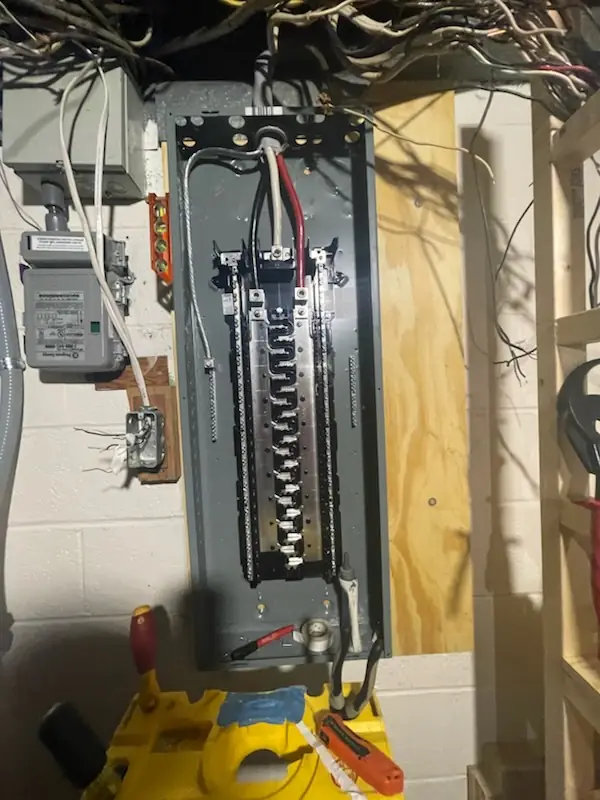
Real photos from our own jobs around Asheville. No stock photos.
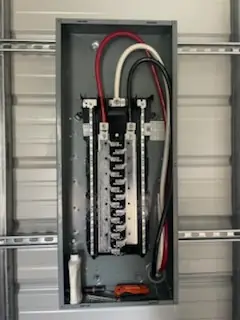
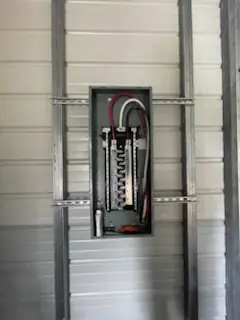
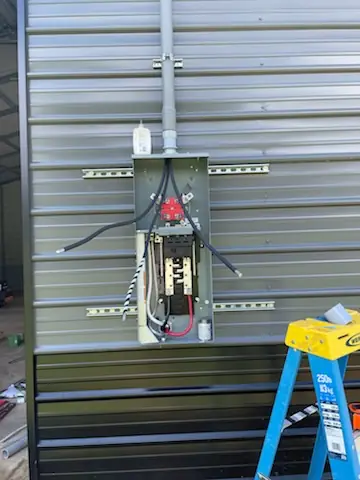
We answer calls 7 days a week, 5 AM to 11:30 PM. A real person, not a phone tree or call center.
(828) 551-9843 Call now · Free estimate (828) 551-9843