
Whole-home (22-26 kW)
$10,000 – $18,000
Generator unit + concrete pad + 200A automatic transfer switch + electrical install + permits. Add $1,500-$3,000 if a panel upgrade is needed.
Whole-home automatic standby generators on propane or natural gas. Manual-start interlock setups for portable generators. Automatic transfer switches. Lifetime workmanship warranty.
Asheville loses power. Sometimes for a few hours during a summer thunderstorm, sometimes for three days when an ice storm takes out a feeder line in the Pisgah Forest. If your home runs on a well pump, has a gas furnace that needs electricity for the blower, or has anyone in it on medical equipment — those outages aren't an inconvenience, they're a problem.
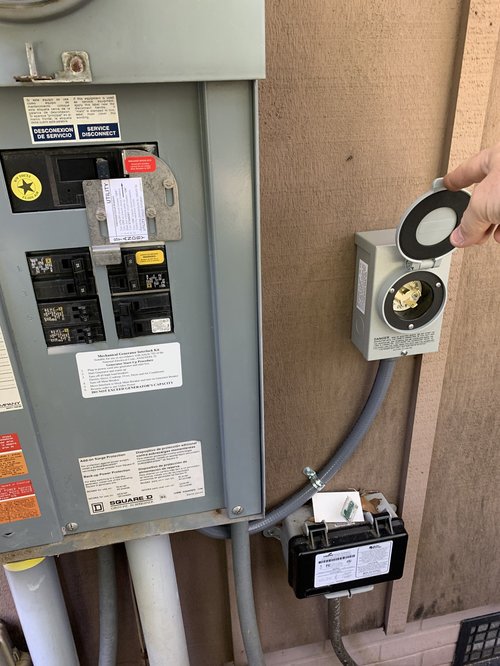
We install two kinds of backup power across Buncombe County: full automatic whole-home standby generators (propane setups in Haw Creek and Fairview, natural gas where the gas line is sized for it), and manual-start interlock setups for owners who already have or want to buy a portable generator. The interlock setup is what we sell most — lower upfront cost, you start the portable yourself when the power goes out.
Below: how we size generators, the propane vs natural gas trade-off, and what an automatic transfer switch actually does.
Industry averages for residential standby gensets in Western NC. Final quote depends on your panel, gas service, distance from the meter, and which brand you choose.
$10,000 – $18,000
Generator unit + concrete pad + 200A automatic transfer switch + electrical install + permits. Add $1,500-$3,000 if a panel upgrade is needed.
typically around $650 + your portable
50-amp interlock kit and exterior power inlet. You connect your own portable generator (around $1,000) when the power goes out. We sell more of these than automatic standby generators because the upfront cost is much lower. You choose at the panel which circuits to run.
tank arranged separately
We don't sell propane tanks — those go through your propane provider. Tanks typically run $800-$2,500 (above-ground 250-500 gallon, 24-72 hours of runtime). Once the tank and fuel connection are handled, we install the generator and electrical connection.
These are typical ranges, not your quote. We do a load calculation and walk-through before pricing your specific job.
The single biggest decision in a generator install. Whole-home automatic gives you full backup with no thinking; the manual-start interlock setup costs a fraction of that and uses a portable you start yourself.
Runs everything during an outage — including HVAC.
Right fit: newer Asheville homes (2000+) with 200A panels, gas furnaces are an exception, and you want zero compromise during a 3-day outage.
You start a portable generator when the power goes out. The interlock lets generator power feed your panel while locking out the main breaker.
Right fit: many Asheville homes that want backup power without the cost of a full automatic standby generator. We sell more of these than auto-start standby generators.
We do a load calculation on-site before quoting. Many Buncombe County homes that ask about full automatic whole-home end up choosing the manual-start interlock setup once they see the price difference — including the panel upgrade that auto-standby often requires.
Pro: runs continuously, no refueling, no tank to look at.
Con: only works if your home has a gas line big enough. Most Asheville homes with existing gas service need the line upsized for a generator's flow rate.
When it fits: newer construction with sized service, downtown / closer-in neighborhoods with strong gas infrastructure.
Pro: works anywhere, tank is sized to your runtime needs (24-72 hours common).
Con: tank from your propane provider (typically $800-$2,500), tank visible on property unless buried, refill required after long outages.
When it fits: rural Buncombe (Haw Creek, Fairview, Candler), older homes without natural gas service, anywhere east of Asheville where gas mains thin out.
An automatic transfer switch (ATS) sits between your utility service and your panel. When it detects an outage — typically a 10-second voltage drop — it starts the generator, waits for stable output, and switches your home from utility to generator power. When utility power returns and stays stable for a few minutes, it switches back and shuts the generator down.
On automatic standby installs we label every circuit at the panel so you know what runs on backup and what doesn't. Partial-coverage setups label the breakers in green (always on backup) and the rest stay neutral. You'll see at a glance whether the second oven or the hot tub circuit is going to work during the next storm.
On automatic standby installs you can choose to wire only specific essentials if you don't want to pay for whole-home capacity. Common picks: refrigerator, freezer, well pump, gas furnace blower, a few outlets in the kitchen and primary bedroom, lights in main living areas. Skipped: central HVAC, electric range, dryer, hot tub, pool pump.
Depends on your budget and how hands-on you want to be. Whole-home automatic standby generators (typically 22-26 kW, $10K-$18K) run everything through an automatic transfer switch — power flips over on its own. Manual-start interlock setups use a portable generator you start yourself; we install the 50-amp interlock kit and inlet (typically around $650), you buy the portable (around $1,000). We sell more of the manual setups because the install cost is much lower.
Both work. Natural gas is cleaner and runs continuously without refueling — but only if your home already has a gas line big enough. Propane requires a tank but works anywhere. We size the gas piping or propane tank for the generator's rated load.
Most standby generator installs take 2-4 days on-site, plus the lead time for the generator to arrive (often 2-4 weeks) and for any required propane tank or gas line work. We coordinate the gas piece if needed.
Yes — Buncombe County requires permits for both electrical (the transfer switch and panel work) and mechanical (the gas connection). We pull both, schedule inspections, and don't call the job complete until it all passes.
It's the device that detects a power outage, starts the generator, and switches your home from utility power to generator power — automatically, in about 10-15 seconds. When utility power returns, it switches back and shuts the generator down. No more pulling extension cords through windows.
Not formally yet — we don't currently offer annual service plans, though we plan to. For now, you'll need to handle maintenance yourself or use your generator brand's authorized service network. Generators that don't get serviced fail when you actually need them.
A real person picks up M-F 8am-7pm — not a phone tree, not a call center.
(828) 551-9843 Call now · Free estimate (828) 551-9843