Colour temperature. 2700K for living rooms and bedrooms — it reads like the incandescent light people actually miss. 3000K suits kitchens and baths. 4000K is honest neutral light for a garage, workshop or laundry. 5000K daylight belongs in a shop, not a living room. The rule that matters more than any of them: don't mix temperatures inside one room. A warm can next to a cool one is the single most common lighting complaint we get called about, and it's a bulb choice, not a wiring fault.
Dimming. LEDs need a dimmer rated for LED loads, matched to the bulbs you own. An incandescent-era dimmer will make good bulbs flicker, buzz, or die halfway down the dial. We spec the pair, not just the switch.
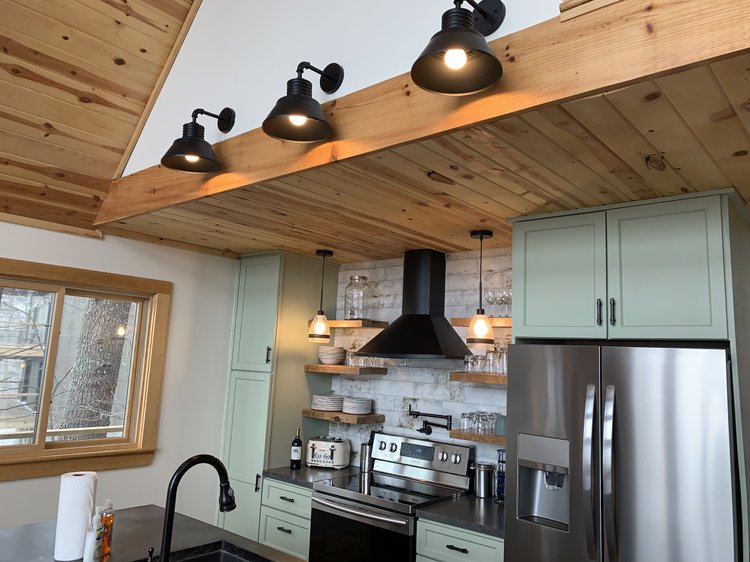
Chandelier and pendant sizing. Over a dining table, a fixture roughly half to two-thirds the width of the table looks right, hung so the bottom sits about 30 to 36 inches above the tabletop. Over a kitchen island, pendants at the same 30-to-36-inch height, spaced so they read as deliberate rather than crowded.
Recessed layout. A useful starting point is spacing cans at about half the ceiling height in feet — nine-foot ceiling, cans roughly four and a half feet apart. Four-inch cans for accent work and over islands, six-inch for general room light. If your attic has blown-in insulation, and most Asheville attics do, the cans have to be insulation-contact rated. That one isn't taste, it's a fire issue.
Older ceilings. Plaster and lath doesn't cut like drywall, and a lot of Montford and West Asheville ceilings are exactly that. It's very workable — it just takes longer, and we'd rather tell you that up front than surprise you on the invoice.