Electrical service · Asheville, NC

EV Charger Installation in Asheville

Level 2 home charger installs. Panel capacity assessment first. Permits pulled. Federal 30% tax credit documentation. Lifetime workmanship warranty.

★ 4.8 stars · 163 Google reviews · NCBELC #33298 · Insured · Lifetime workmanship warranty · No trip fee · No minimum job
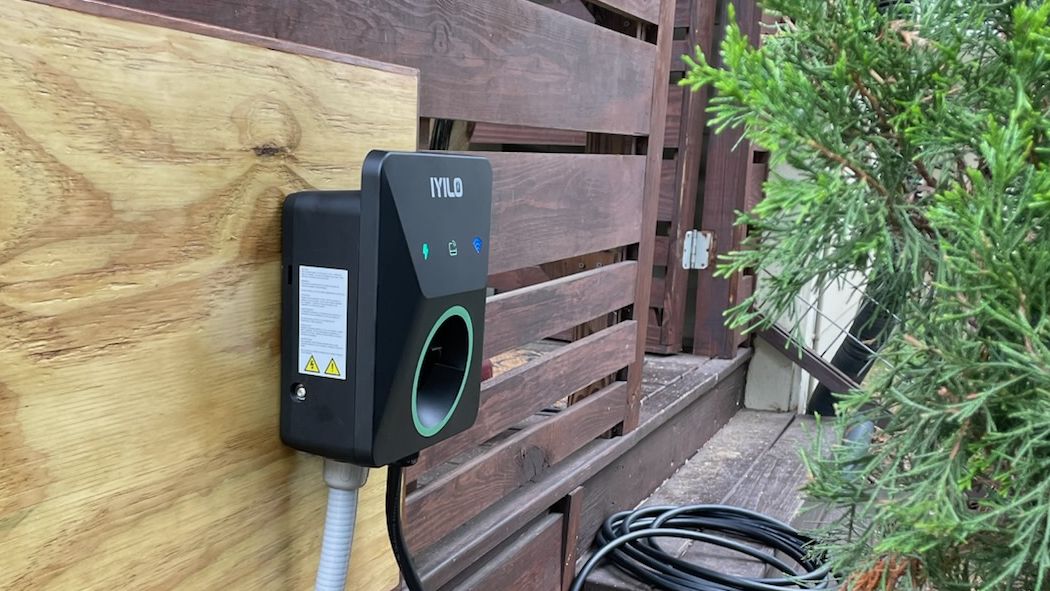
Electric car charger installation

Real cost. Permit pulled. Tax credit documented.

Level 2 install (panel has capacity)

$850 – $1,800

Dedicated 40-50 amp 240V circuit. NEMA 14-50 outlet or hardwired. Code-compliant grounding and protection. Permit pulled, inspection scheduled.

Install + panel upgrade

+$1,500 – $2,500

If your panel can't handle a 40-50 amp dedicated circuit (common in 60-100 amp Asheville homes), we upgrade the panel first. Total cost typically $3,000-$5,000 depending on existing panel.

Federal 30C tax credit

Up to $1,000

30% of installation cost (residential cap $1,000). We provide the receipts and IRS Form 8911 documentation. Applies to the charger and the install — including a panel upgrade if it's needed for the EV.

First question

Can your panel actually handle a Level 2 charger?

This is the question 80% of Asheville homeowners don't ask before buying a charger. We answer it before you do anything else.

Built after 2010 with a 200-amp panel?

Probably yes. Most modern Asheville homes have spare capacity for a 40-50 amp dedicated circuit. We'll confirm with a load calculation, but expect a straightforward $850-$1,800 install.

1970s–2000s home, 100-amp or 150-amp panel?

Maybe. Depends on what else is running — if you've got electric heat or a tankless water heater, your panel might already be at the edge. A load calculation tells us whether we can squeeze in a 32A charger or if you need a panel upgrade first.

Pre-1970 home in Montford, Grove Park, West Asheville?

Almost certainly no. 60-amp service was common in pre-1970 builds, and even 100-amp can't carry a modern EV charger alongside everything else. Plan for a panel upgrade ($1,500-$2,500 added to the EV install) and budget $3,000-$5,000 total.

Charger choice

32A vs 40A vs 48A — what's right for your driving.

32A Level 2

~25 miles of range per hour

Plenty for most Asheville commuters. If you drive 30-50 miles a day and charge overnight, 32A finishes in 2-3 hours. Cheaper install (uses smaller wire, smaller breaker), often fits in older panels without an upgrade.

40A Level 2

~30 miles of range per hour

The sweet spot for most homeowners. Faster than you'll typically need, but useful if you also do day trips to Brevard or DuPont and come back needing a midday top-up. NEMA 14-50 outlet works at this level.

48A Level 2

~35 miles of range per hour

Hardwired only at this amperage. Worth it if you have two EVs sharing one charger, or if you regularly run the battery near empty. Requires a heftier dedicated circuit (6-gauge copper minimum).

Most homeowners pick more amperage than they need. We'll talk you out of it if it doesn't match your driving — that means smaller install cost and no panel upgrade you didn't actually need.

What charger should you buy?

The honest answer: we recommend Autel. Reliable, well-priced, good app, install hardware is solid. But almost any major-brand Level 2 charger installs the same way — ChargePoint, Tesla Wall Connector, Wallbox, JuiceBox, Grizzl-E, Emporia. If you already bought a different brand, bring it; we install it.

What matters more than the brand: get it hardwired. NEMA 14-50 plug-in installs are convenient but the plug itself becomes a failure point under sustained 40A+ load. There are documented cases of plug-in EV chargers melting their outlets and starting house fires. Hardwiring runs the conductor straight into the charger — no plug, no outlet, no failure point. Required by code above 48A anyway.

Federal 30C tax credit — what it actually covers.

The Alternative Fuel Vehicle Refueling Property Credit (extended through 2032 by the Inflation Reduction Act) gives you 30% of your installation cost back as a federal tax credit, capped at $1,000 for residential.

What counts toward the credit: the charger itself, electrical materials and labor for the install, permit fees, and a panel upgrade if it's required to install the charger. Most full installs qualify for close to the $1,000 cap.

What you need from us: itemized receipts split between equipment and installation, plus the address and date the unit was placed in service. We email all of that within a week of the job. Hand it to your tax preparer.

Your tax preparer files IRS Form 8911. We're electricians, not CPAs — but the documentation we provide is what every preparer asks for.

Common questions

EV charger questions, answered.

Ready to talk to an actual electrician?

We answer the phone Monday through Friday, 8am to 7pm.

(828) 551-9843 Call now · Free estimate (828) 551-9843
Licensed & insured · Asheville-owned · Lifetime workmanship warranty